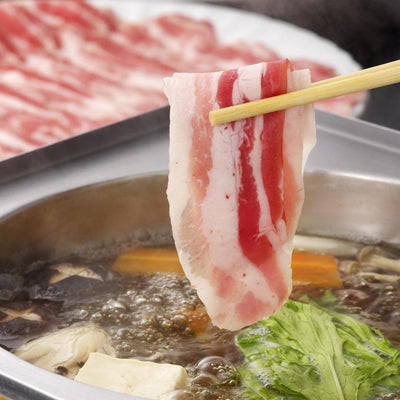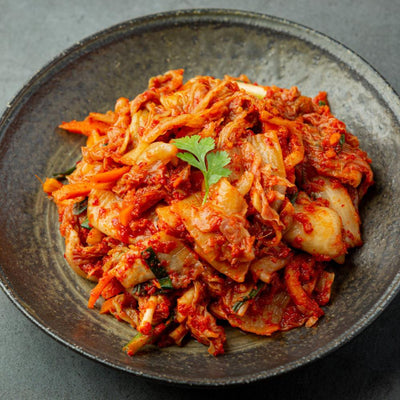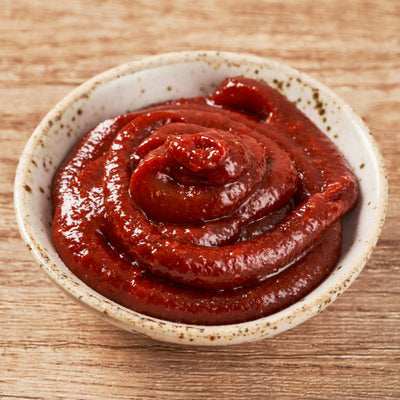

Kimchi-jjigae is a comforting Korean stew that combines rich, savoury flavours with the bold tang of fermented cabbage kimchi. Simmered in a deeply flavourful broth made with gochujang Korean chilli paste, this hearty dish features tender pork belly shabu shabu, seafood tofu cheese, mushrooms, carrots, cucumber, enoki mushrooms, and sliced onions. Every ingredient absorbs the robust, spicy broth, creating a delicious balance of umami, mild heat, and refreshing textures in every spoonful.
The tender pork belly adds richness to the stew, while the cabbage kimchi brings its signature tangy depth that perfectly complements the savoury gochujang broth. Seafood tofu cheese provides a smooth, delicate contrast to the bold flavours, while the fresh vegetables and mushrooms add natural sweetness and texture. Finished with a simple seasoning of salt to enhance every ingredient, Kimchi-jjigae is a wholesome, warming meal that is both satisfying and nourishing. Whether enjoyed on its own or served with a bowl of steamed rice, this classic Korean favourite is the perfect comfort food for any day of the week.
Ingredients
-
SuperPork Pork Belly Shabu Shabu
-
Yorokobi Cabbage Kimchi
-
Sempio Gochujang Korean Chili Paste
-
Figo Seafood Tofu Original | Cheese Flavor
-
Mushroom
- Carrot
- Cucumber
- Enoki Mushroom
- Onion
- Salt
Instructions
- On a chopping board, cut the pork belly shabu shabu into halves. Slice the carrot, cucumber, onion, and mushrooms. Trim off the root end of the enoki mushrooms, then separate them into smaller clusters.
- Bring a pot of water to a boil over high heat. Add 5 tablespoons of gochujang Korean chilli paste and stir until fully dissolved. Add the sliced mushrooms, carrots, cucumber, and onions, then cover and simmer for 1–2 minutes.
- Season the broth with salt. Add the enoki mushrooms, pork belly shabu shabu, and seafood tofu cheese.
- Add the cabbage kimchi according to your preferred level of tanginess and flavour. Cover the pot and simmer over medium heat for 3–5 minutes, or until the pork is fully cooked and the tofu cheese is heated through.
- Serve the Kimchi-jjigae hot on its own or with a bowl of steamed rice for a comforting and satisfying Korean meal.
Tips for Korean Kimchi-Jjigae
Don't overcook the pork. Pork belly shabu shabu slices are very thin and cook quickly. Simmer just until the meat is cooked through to keep it tender and juicy.
Adjust the spice level. Add more or less gochujang depending on your preferred heat level. You can also add extra kimchi for a stronger tangy flavour.
Taste before adding more salt. Kimchi and gochujang are naturally salty, so season gradually and adjust only after the stew has simmered.
Serve piping hot. Kimchi-jjigae is best enjoyed straight from the pot while the broth is bubbling hot, allowing the flavours and aroma to shine.
What to Serve with Korean Kimchi-Jjigae
Kimchi-jjigae is best enjoyed with a bowl of steamed rice, which perfectly complements its rich, spicy, and tangy broth. To create a complete Korean-style meal, serve it alongside classic banchan such as seasoned spinach, bean sprouts, or pickled radish, and pair it with crispy pan-fried mandu, kimchi pancake, or a fluffy Korean omelette for added texture and flavour.
FAQ
1. What is Kimchi-jjigae?
Kimchi-jjigae is a traditional Korean stew made with fermented cabbage kimchi, pork, vegetables, and a flavourful broth seasoned with gochujang. It is one of Korea's most popular comfort foods.
2. Is Kimchi-jjigae very spicy?
It has a mild to moderate level of spice from the gochujang and kimchi. You can easily adjust the heat by adding more or less gochujang.
3. Can I add other vegetables or ingredients?
Absolutely. Tofu, zucchini, spring onions, shiitake mushrooms, or ramen noodles are all delicious additions.
4. Can I add noodles?
Yes. Instant ramen, udon, glass noodles, or Korean sweet potato noodles (dangmyeon) can be added to make the stew even more filling.